For years, corporate fraud was limited by the costs, expertise, and resources required to carry out a convincing deception. Artificial intelligence (AI) has changed this.
Today, AI can create realistic voices, videos, emails, invoices, identities, and customer interactions at a scale and speed that traditional fraud controls were never designed to address. AI-powered fraud is a governance, financial, and strategic risk – not just an IT problem.
The Evolution of Corporate Fraud
Fraud is no longer limited to static phishing emails. Threat actors, from organized criminal syndicates to rogue insiders, use large language models and advanced machine learning to execute complex, multilayered fraud schemes.
One of the most cited reference cases is the 2024 Arup incident. A finance employee at the engineering firm’s Hong Kong office was tricked into transferring about $25 million across multiple transactions after joining a video conference call with deepfake replicas of the company’s CFO and other colleagues. The fraud succeeded because it targeted the human authorization step, the exact step where financial controls assume identity can be trusted on sight and sound.
Beyond deepfake executives, new trends include synthetic vendor creation, where generative models fabricate entire corporate entities. Each comes complete with tax IDs, websites, regulatory filings, and executive profiles. They are used to infiltrate accounts payable systems. Bad actors also use machine learning to reverse-engineer enterprise anti-fraud algorithms, find blind spots, and execute micro-transactions that stay beneath detection thresholds.
Why the Numbers Should Worry Boards, Not Just Security Teams
The 2026 INTERPOL Global Financial Fraud Threat Assessment flagged AI-powered fraud as one of organized crime’s primary growth sectors. It reports that fraud alerts have risen 54 percent since 2024, with more than 1,500 cross-border cases involving $1.1 billion in lost assets.
The Regulatory Gap Executives Should Worry About
Regulation is accelerating, but it is not solving the fraud problem. The EU AI Act’s transparency provisions took effect Aug. 2. It requires the disclosure of AI-generated content, with penalties for noncompliance. As of July 2026, 48 states in the United States have enacted at least one deepfake-related law, according to Ballotpedia’s tracker. Yet none of these frameworks is really built for enterprise fraud. They target content moderation, disclosure, and non-consensual media. None directly addresses the authorization workflows attackers actually exploit. A company that is fully compliant with deepfake laws would still be exposed by the Arup scenario.
Regulators such as the Federal Trade Commission (FTC) have signaled that using AI to deceive is prosecutable under existing fraud statutes, but enforcement is reactive and case-by-case. Executives who treat fraud as just a criminal act rather than a governance failure arising from inadequate technical oversight face severe personal and corporate liability.
Strategic Challenges and Recommended Actions
Defending against AI-powered fraud requires rethinking how security spending is justified. Traditional ROI models rely on historical loss avoidance, but in the age of generative fraud, past losses are an unreliable predictor of future exposure.
The primary implementation challenge is friction versus security. Deploying stronger authentication and behavior monitoring across corporate touchpoints creates friction that employees and vendors resist. In addition, integrating AI defenses into legacy enterprise resource planning (ERP) systems creates technical debt. Organizations also struggle with data silos, even though fraud detection now requires real-time visibility across all departments.
To protect enterprise value, leadership teams should move from passive compliance to active resilience.
Verify out of band. Require a callback to a known number and dual approval for large or unusual transfers. Never authorize a payment on a voice or video request alone.
Strengthen authentication. Use multifactor cryptographic verification and zero-trust principles (verify every request, regardless of source). Treat biometrics with caution, since deepfakes can spoof them.
Red-team for AI fraud. Have ethical hackers use generative AI to stress test internal systems and give the risk committee ownership of the results.
Use AI to fight AI. Deploy monitoring tools that flag behavioral anomalies across internal communications, ledger entries, and vendor registries in real time.
Establish cross-functional fraud task forces. Break down departmental silos and treat fraud detection as an integrated business process.
Future Outlook
As AI advances, the convergence of generative AI and autonomous software agents suggest that corporate fraud may increasingly be automated, including by self-directed AI agents operating as fraud syndicates. Business leaders must recognize that the future of corporate defense relies not on human vigilance alone, but on building resilient, self-healing digital ecosystems where trust is algorithmically verified and continuously audited.
Alan F Burke CPA
AI-Powered Corporate Fraud: What Business Leaders Need to Know
October 1, 2026 · Blog, What's New in Technology
⏱ 4 min read
For years, corporate fraud was limited by the costs, expertise, and resources required to carry out a convincing deception. Artificial intelligence (AI) has changed this.
Today, AI can create realistic voices, videos, emails, invoices, identities, and customer interactions at a scale and speed that traditional fraud controls were never designed to address. AI-powered fraud is a governance, financial, and strategic risk – not just an IT problem.
The Evolution of Corporate Fraud
Fraud is no longer limited to static phishing emails. Threat actors, from organized criminal syndicates to rogue insiders, use large language models and advanced machine learning to execute complex, multilayered fraud schemes.
One of the most cited reference cases is the 2024 Arup incident. A finance employee at the engineering firm’s Hong Kong office was tricked into transferring about $25 million across multiple transactions after joining a video conference call with deepfake replicas of the company’s CFO and other colleagues. The fraud succeeded because it targeted the human authorization step, the exact step where financial controls assume identity can be trusted on sight and sound.
Beyond deepfake executives, new trends include synthetic vendor creation, where generative models fabricate entire corporate entities. Each comes complete with tax IDs, websites, regulatory filings, and executive profiles. They are used to infiltrate accounts payable systems. Bad actors also use machine learning to reverse-engineer enterprise anti-fraud algorithms, find blind spots, and execute micro-transactions that stay beneath detection thresholds.
Why the Numbers Should Worry Boards, Not Just Security Teams
The 2026 INTERPOL Global Financial Fraud Threat Assessment flagged AI-powered fraud as one of organized crime’s primary growth sectors. It reports that fraud alerts have risen 54 percent since 2024, with more than 1,500 cross-border cases involving $1.1 billion in lost assets.
The Regulatory Gap Executives Should Worry About
Regulation is accelerating, but it is not solving the fraud problem. The EU AI Act’s transparency provisions took effect Aug. 2. It requires the disclosure of AI-generated content, with penalties for noncompliance. As of July 2026, 48 states in the United States have enacted at least one deepfake-related law, according to Ballotpedia’s tracker. Yet none of these frameworks is really built for enterprise fraud. They target content moderation, disclosure, and non-consensual media. None directly addresses the authorization workflows attackers actually exploit. A company that is fully compliant with deepfake laws would still be exposed by the Arup scenario.
Regulators such as the Federal Trade Commission (FTC) have signaled that using AI to deceive is prosecutable under existing fraud statutes, but enforcement is reactive and case-by-case. Executives who treat fraud as just a criminal act rather than a governance failure arising from inadequate technical oversight face severe personal and corporate liability.
Strategic Challenges and Recommended Actions
Defending against AI-powered fraud requires rethinking how security spending is justified. Traditional ROI models rely on historical loss avoidance, but in the age of generative fraud, past losses are an unreliable predictor of future exposure.
The primary implementation challenge is friction versus security. Deploying stronger authentication and behavior monitoring across corporate touchpoints creates friction that employees and vendors resist. In addition, integrating AI defenses into legacy enterprise resource planning (ERP) systems creates technical debt. Organizations also struggle with data silos, even though fraud detection now requires real-time visibility across all departments.
To protect enterprise value, leadership teams should move from passive compliance to active resilience.
Verify out of band. Require a callback to a known number and dual approval for large or unusual transfers. Never authorize a payment on a voice or video request alone.
Strengthen authentication. Use multifactor cryptographic verification and zero-trust principles (verify every request, regardless of source). Treat biometrics with caution, since deepfakes can spoof them.
Red-team for AI fraud. Have ethical hackers use generative AI to stress test internal systems and give the risk committee ownership of the results.
Use AI to fight AI. Deploy monitoring tools that flag behavioral anomalies across internal communications, ledger entries, and vendor registries in real time.
Establish cross-functional fraud task forces. Break down departmental silos and treat fraud detection as an integrated business process.
Future Outlook
As AI advances, the convergence of generative AI and autonomous software agents suggest that corporate fraud may increasingly be automated, including by self-directed AI agents operating as fraud syndicates. Business leaders must recognize that the future of corporate defense relies not on human vigilance alone, but on building resilient, self-healing digital ecosystems where trust is algorithmically verified and continuously audited.
Disclaimer
These articles provide general information on tax, accounting, and financial topics for small businesses and individuals. They are educational in nature and are not specific legal, accounting, financial, tax, or other professional advice, and should not be relied upon as such. This content was prepared by Service2Client and may have been reviewed or edited by the website owner for accuracy and compliance. Look for a trust mark below for verification details. No representation is made that any approach described will achieve a particular result, and no regulatory or professional body has reviewed or endorsed this content. Because each situation is different, readers should consult a qualified professional about their specific circumstances before acting. Images accompanying these articles are protected by copyright and may not be copied or reused.
Over the past few years, artificial intelligence (AI) has evolved from a futuristic concept into a core engine of modern enterprise strategy. Organizations across every major industry are now using AI to automate complex workflows, augment customer service operations, drive predictive decision-making, and unlock greater operational productivity.
Understanding AI Risk
AI is not an easily defined category, as it spans several dimensions that traditional risk frames are not built to accommodate. The Gallagher report, Smart Systems, Blind Spots: Rethinking Insurance for the AI Era, found that the pace of AI adoption surpassed the insurance industry’s capacity to develop responsive products.
What makes AI unique is that risks associated with it emerge from the way systems learn, generate outputs, and make decisions to influence customers, employees, and business outcomes.
Modern businesses face several distinct risk vectors:
Biased or discriminatory decisions Automated recruitment, lending, or credit-scoring models trained on flawed data can produce systematically unfair outcomes. This can result in regulatory penalties, civil rights litigation, and damaged brand reputation.
Hallucinations and inaccurate outputs AI models can confidently generate inaccurate or misleading information. A customer-facing AI assistant that provides incorrect financial, legal or medical guidance could create significant liability exposure.
Intellectual property and copyright disputes Models trained on vast, unvetted datasets reproduce copyrighted material, exposing organizations to costly intellectual property infringement claims.
Data privacy violations Unintentional exposure of proprietary trade secrets or personally identifiable information (PII) during model training can trigger regulatory investigations under frameworks such as the EU AI Act, the General Data Protection Regulation (GDPR), or state-level privacy laws.
Cybersecurity vulnerabilities AI introduces new attack vectors, including prompt injection, data poisoning, and model extraction. Malicious actors can exploit these to compromise business integrity.
Financial losses Autonomous trading agents or algorithmic pricing models operating at high speeds can execute erroneous transactions, leading to immediate financial losses.
Why Traditional Insurance May Not Be Enough
Existing coverage was not designed for current AI issues. Cyber policies were designed around data breaches and network intrusion. This does not cover an AI model making a biased hiring decision or fabricating a financial projection.
Professional indemnity and E&O policies assume a human professional exercised judgment. So, when an algorithm makes a mistake, an insurer may dispute whether the policy was intended to respond. For general liability policies, the focus is on bodily injury and property damage. If an AI program causes bodily injury, insurers can debate whether the policy applies.
Several incidents have caused some insurance companies to exclude AI from their corporate policies. For instance, Google was sued by a Minnesota-based company after its AI Overviews feature named it as a defendant in a lawsuit. This is just one case that highlights the growing concern around “silent insurance” when policies do not explicitly address AI-related risks. However, businesses may assume they are covered when they are not.
The challenge is compounded by the rapidly evolving legal landscape, with governments worldwide introducing new regulations.
The Rise of AI Liability Coverage
In response, a new category is beginning to take shape. This is AI liability insurance. These policies are designed to explicitly address the development, deployment, and use of AI systems. While offerings may vary across providers, AI liability covers incidents such as AI-driven discrimination claims, IP infringement from generative outputs, financial losses from automated decision-making, and regulatory penalties tied to AI non-compliance.
Insurers are approaching underwriting as they did with early cyber policies. They are starting cautiously, requiring detailed disclosure of how AI is used, existing governance controls, and how models are tested and monitored.
Beyond Insurance: Building Comprehensive AI Resilience
Insurance alone cannot eliminate AI risk and should not be a substitute for operational resilience. Organizations building genuine AI resilience are investing in:
Formal AI governance frameworks
Meaningful oversight of consequential decisions
Ongoing model monitoring and auditing
Employee training on responsible AI use
Clearly articulated responsible AI principles
Tested incident response plans specifically for AI-related failures.
A well-governed AI program will also make a business significantly more insurable, as underwriters increasingly price risk based on demonstrated controls.
Conclusion
AI has become one of the greatest sources of competitive advantage as well as a new source of liability. As regulatory scrutiny increases and AI-driven decisions become more consequential, executives must broaden their understanding of enterprise risk. Insurance should not be viewed as a substitute for governance, oversight or responsible AI practices.
For businesses increasingly relying on AI, the question is no longer whether AI creates liability risk, but whether existing insurance is equipped to respond to it.
Alan F Burke CPA
Insurance for AI Risk: Is It Time to Consider AI Liability Coverage?
September 1, 2026 · Blog, What's New in Technology
⏱ 4 min read
Over the past few years, artificial intelligence (AI) has evolved from a futuristic concept into a core engine of modern enterprise strategy. Organizations across every major industry are now using AI to automate complex workflows, augment customer service operations, drive predictive decision-making, and unlock greater operational productivity.
Understanding AI Risk
AI is not an easily defined category, as it spans several dimensions that traditional risk frames are not built to accommodate. The Gallagher report, Smart Systems, Blind Spots: Rethinking Insurance for the AI Era, found that the pace of AI adoption surpassed the insurance industry’s capacity to develop responsive products.
What makes AI unique is that risks associated with it emerge from the way systems learn, generate outputs, and make decisions to influence customers, employees, and business outcomes.
Modern businesses face several distinct risk vectors:
Biased or discriminatory decisions Automated recruitment, lending, or credit-scoring models trained on flawed data can produce systematically unfair outcomes. This can result in regulatory penalties, civil rights litigation, and damaged brand reputation.
Hallucinations and inaccurate outputs AI models can confidently generate inaccurate or misleading information. A customer-facing AI assistant that provides incorrect financial, legal or medical guidance could create significant liability exposure.
Intellectual property and copyright disputes Models trained on vast, unvetted datasets reproduce copyrighted material, exposing organizations to costly intellectual property infringement claims.
Data privacy violations Unintentional exposure of proprietary trade secrets or personally identifiable information (PII) during model training can trigger regulatory investigations under frameworks such as the EU AI Act, the General Data Protection Regulation (GDPR), or state-level privacy laws.
Cybersecurity vulnerabilities AI introduces new attack vectors, including prompt injection, data poisoning, and model extraction. Malicious actors can exploit these to compromise business integrity.
Financial losses Autonomous trading agents or algorithmic pricing models operating at high speeds can execute erroneous transactions, leading to immediate financial losses.
Why Traditional Insurance May Not Be Enough
Existing coverage was not designed for current AI issues. Cyber policies were designed around data breaches and network intrusion. This does not cover an AI model making a biased hiring decision or fabricating a financial projection.
Professional indemnity and E&O policies assume a human professional exercised judgment. So, when an algorithm makes a mistake, an insurer may dispute whether the policy was intended to respond. For general liability policies, the focus is on bodily injury and property damage. If an AI program causes bodily injury, insurers can debate whether the policy applies.
Several incidents have caused some insurance companies to exclude AI from their corporate policies. For instance, Google was sued by a Minnesota-based company after its AI Overviews feature named it as a defendant in a lawsuit. This is just one case that highlights the growing concern around “silent insurance” when policies do not explicitly address AI-related risks. However, businesses may assume they are covered when they are not.
The challenge is compounded by the rapidly evolving legal landscape, with governments worldwide introducing new regulations.
The Rise of AI Liability Coverage
In response, a new category is beginning to take shape. This is AI liability insurance. These policies are designed to explicitly address the development, deployment, and use of AI systems. While offerings may vary across providers, AI liability covers incidents such as AI-driven discrimination claims, IP infringement from generative outputs, financial losses from automated decision-making, and regulatory penalties tied to AI non-compliance.
Insurers are approaching underwriting as they did with early cyber policies. They are starting cautiously, requiring detailed disclosure of how AI is used, existing governance controls, and how models are tested and monitored.
Beyond Insurance: Building Comprehensive AI Resilience
Insurance alone cannot eliminate AI risk and should not be a substitute for operational resilience. Organizations building genuine AI resilience are investing in:
Formal AI governance frameworks
Meaningful oversight of consequential decisions
Ongoing model monitoring and auditing
Employee training on responsible AI use
Clearly articulated responsible AI principles
Tested incident response plans specifically for AI-related failures.
A well-governed AI program will also make a business significantly more insurable, as underwriters increasingly price risk based on demonstrated controls.
Conclusion
AI has become one of the greatest sources of competitive advantage as well as a new source of liability. As regulatory scrutiny increases and AI-driven decisions become more consequential, executives must broaden their understanding of enterprise risk. Insurance should not be viewed as a substitute for governance, oversight or responsible AI practices.
For businesses increasingly relying on AI, the question is no longer whether AI creates liability risk, but whether existing insurance is equipped to respond to it.
Disclaimer
These articles provide general information on tax, accounting, and financial topics for small businesses and individuals. They are educational in nature and are not specific legal, accounting, financial, tax, or other professional advice, and should not be relied upon as such. This content was prepared by Service2Client and may have been reviewed or edited by the website owner for accuracy and compliance. Look for a trust mark below for verification details. No representation is made that any approach described will achieve a particular result, and no regulatory or professional body has reviewed or endorsed this content. Because each situation is different, readers should consult a qualified professional about their specific circumstances before acting. Images accompanying these articles are protected by copyright and may not be copied or reused.
For two decades, enterprise software has been built around a simple assumption: people log into multiple applications to retrieve information, make decisions, and complete work. A CRM, a project tracker, a business intelligence dashboard, a support ticketing system, and more. All this is because these applications operate in isolation.
There is a shift whose intention is not eliminating SaaS applications. It’s about eliminating the need to constantly switch between them.
Why Dashboards Existed
Dashboards were built because software couldn’t interpret business intent. Humans had to retrieve, interpret charts, and decide what to do next. While dashboards were designed for human navigation, these static SaaS front ends are being replaced by dynamic, real-time interface synthesis.
The dashboard model worked when companies relied on a handful of applications. Today, enterprises manage hundreds of SaaS tools. An average large enterprise runs multiple SaaS applications – about 291 with large organizations scaling over 400. This makes constant switching a productivity problem rather than convenience.
A Harvard Business Review study revealed that digital workers toggle between different applications and websites about 1,200 times a day. This tool-switching alone costs employees an average of 44 hours per year due to tool fatigue. Meanwhile, most of the enterprise SaaS stack goes completely unused, and this is a weighty business cost.
What is Actually Changing
The shift in business computing is not about adding another dashboard to the stack, but rather usurping its purpose. The enterprise interface is beginning to shift toward intent-native workspaces, reducing the need to navigate traditional dashboards for routine work.
In comes agentic AI, which collapses the decision chain. Instead of opening a chart to figure out what it means, the user states an intent and an agent queries the underlying systems directly, synthesizes across them, and gives the user an answer or takes the action itself. For example, instead of a user logging into five different systems, a finance agent pulls real-time vendor invoices from an ERP, a legal agent scans contract terms, and a risk agent cross-references historical delivery delays. All coordinated by an orchestration layer.
Generative user interface (GenUI) technology pairs with this orchestration. Instead of presenting the same dashboard to everyone, a GenUI system generates a temporary interface tailored to the user’s immediate request. Once the task is complete, that interface disappears. If a user inputs their intention, such as checking which supplier poses a risk, the system dynamically renders a clean, interactive panel showing only the relevant vendor risk scores.
A survey by CrewAI on 2026 State of Agentic AI Survey found that adoption of agentic AI is moving fast. Of the 500 senior enterprise executives surveyed, 65 percent are already using AI agents, 81 percent have fully adopted and are actively scaling, and 100 percent plan to expand agentic AI use in 2026.
What Still Matters
Dashboards aren’t disappearing; their role is changing. The shift is not toward a better dashboard; it is to create systems that decide and act directly, with humans overseeing outcomes and not every step. Modern AI-driven operations demand speed that previous tools can’t cope with. Having insights without action is now a bottleneck. Static views, manual interpretation, and the lack of proactive alerts and personalized framing are limitations that drive the shift toward agents.
However, while agentic AI determines what happens next, the dashboards will keep documenting the process. They will also exist mainly as audit trails and compliance records, but not as the primary way work gets done.
What This Means for Your Business
For businesses evaluating software, appearance is becoming less important than accessibility. A polished dashboard matters little if AI agents can’t access its data or trigger actions. As enterprises increasingly rely on AI agents to automate work across multiple systems, software without strong AI integration risks becoming difficult to use, costly to upgrade, and easier to replace.
Logistically, this means businesses should start auditing their software stack for API maturity and AI agent readiness. Before renewing or purchasing new software contracts, a business should evaluate whether the platform has robust APIs, allows AI agents to securely access its data and perform actions, and is built to support an AI-driven workflow.
Conclusion
The biggest disruption is not the end of SaaS dashboards – it’s the end of software that waits for human input. The next generation of enterprise software won’t compete on who has the prettiest dashboard. It will compete on which platform gives AI agents the fastest, safest access to data and actions. Businesses that continue buying interfaces instead of intelligent access may soon find themselves paying for software no one opens.
Alan F Burke CPA
The Death of the App: Why Your Business Will Sideline SaaS Dashboards
August 1, 2026 · Blog, What's New in Technology
⏱ 4 min read
For two decades, enterprise software has been built around a simple assumption: people log into multiple applications to retrieve information, make decisions, and complete work. A CRM, a project tracker, a business intelligence dashboard, a support ticketing system, and more. All this is because these applications operate in isolation.
There is a shift whose intention is not eliminating SaaS applications. It’s about eliminating the need to constantly switch between them.
Why Dashboards Existed
Dashboards were built because software couldn’t interpret business intent. Humans had to retrieve, interpret charts, and decide what to do next. While dashboards were designed for human navigation, these static SaaS front ends are being replaced by dynamic, real-time interface synthesis.
The dashboard model worked when companies relied on a handful of applications. Today, enterprises manage hundreds of SaaS tools. An average large enterprise runs multiple SaaS applications – about 291 with large organizations scaling over 400. This makes constant switching a productivity problem rather than convenience.
A Harvard Business Review study revealed that digital workers toggle between different applications and websites about 1,200 times a day. This tool-switching alone costs employees an average of 44 hours per year due to tool fatigue. Meanwhile, most of the enterprise SaaS stack goes completely unused, and this is a weighty business cost.
What is Actually Changing
The shift in business computing is not about adding another dashboard to the stack, but rather usurping its purpose. The enterprise interface is beginning to shift toward intent-native workspaces, reducing the need to navigate traditional dashboards for routine work.
In comes agentic AI, which collapses the decision chain. Instead of opening a chart to figure out what it means, the user states an intent and an agent queries the underlying systems directly, synthesizes across them, and gives the user an answer or takes the action itself. For example, instead of a user logging into five different systems, a finance agent pulls real-time vendor invoices from an ERP, a legal agent scans contract terms, and a risk agent cross-references historical delivery delays. All coordinated by an orchestration layer.
Generative user interface (GenUI) technology pairs with this orchestration. Instead of presenting the same dashboard to everyone, a GenUI system generates a temporary interface tailored to the user’s immediate request. Once the task is complete, that interface disappears. If a user inputs their intention, such as checking which supplier poses a risk, the system dynamically renders a clean, interactive panel showing only the relevant vendor risk scores.
A survey by CrewAI on 2026 State of Agentic AI Survey found that adoption of agentic AI is moving fast. Of the 500 senior enterprise executives surveyed, 65 percent are already using AI agents, 81 percent have fully adopted and are actively scaling, and 100 percent plan to expand agentic AI use in 2026.
What Still Matters
Dashboards aren’t disappearing; their role is changing. The shift is not toward a better dashboard; it is to create systems that decide and act directly, with humans overseeing outcomes and not every step. Modern AI-driven operations demand speed that previous tools can’t cope with. Having insights without action is now a bottleneck. Static views, manual interpretation, and the lack of proactive alerts and personalized framing are limitations that drive the shift toward agents.
However, while agentic AI determines what happens next, the dashboards will keep documenting the process. They will also exist mainly as audit trails and compliance records, but not as the primary way work gets done.
What This Means for Your Business
For businesses evaluating software, appearance is becoming less important than accessibility. A polished dashboard matters little if AI agents can’t access its data or trigger actions. As enterprises increasingly rely on AI agents to automate work across multiple systems, software without strong AI integration risks becoming difficult to use, costly to upgrade, and easier to replace.
Logistically, this means businesses should start auditing their software stack for API maturity and AI agent readiness. Before renewing or purchasing new software contracts, a business should evaluate whether the platform has robust APIs, allows AI agents to securely access its data and perform actions, and is built to support an AI-driven workflow.
Conclusion
The biggest disruption is not the end of SaaS dashboards – it’s the end of software that waits for human input. The next generation of enterprise software won’t compete on who has the prettiest dashboard. It will compete on which platform gives AI agents the fastest, safest access to data and actions. Businesses that continue buying interfaces instead of intelligent access may soon find themselves paying for software no one opens.
Disclaimer
These articles provide general information on tax, accounting, and financial topics for small businesses and individuals. They are educational in nature and are not specific legal, accounting, financial, tax, or other professional advice, and should not be relied upon as such. This content was prepared by Service2Client and may have been reviewed or edited by the website owner for accuracy and compliance. Look for a trust mark below for verification details. No representation is made that any approach described will achieve a particular result, and no regulatory or professional body has reviewed or endorsed this content. Because each situation is different, readers should consult a qualified professional about their specific circumstances before acting. Images accompanying these articles are protected by copyright and may not be copied or reused.

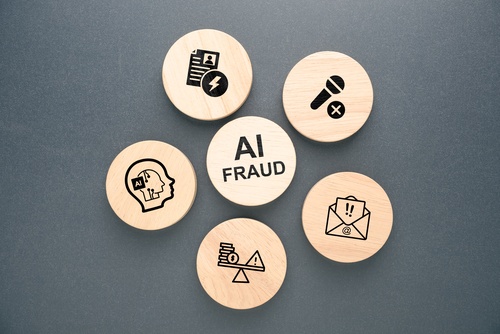 For years, corporate fraud was limited by the costs, expertise, and resources required to carry out a convincing deception. Artificial intelligence (AI) has changed this.


 Over the past few years, artificial intelligence (AI) has evolved from a futuristic concept into a core engine of modern enterprise strategy. Organizations across every major industry are now using AI to automate complex workflows, augment customer service operations, drive predictive decision-making, and unlock greater operational productivity.
 For two decades, enterprise software has been built around a simple assumption: people log into multiple applications to retrieve information, make decisions, and complete work. A CRM, a project tracker, a business intelligence dashboard, a support ticketing system, and more. All this is because these applications operate in isolation.